
In This Article, You’ll Learn: how container laboratories improve deployment speed, flexibility, and cost efficiency, what to consider before investing in one, and how to determine whether they’re the right solution for your research or testing environment.
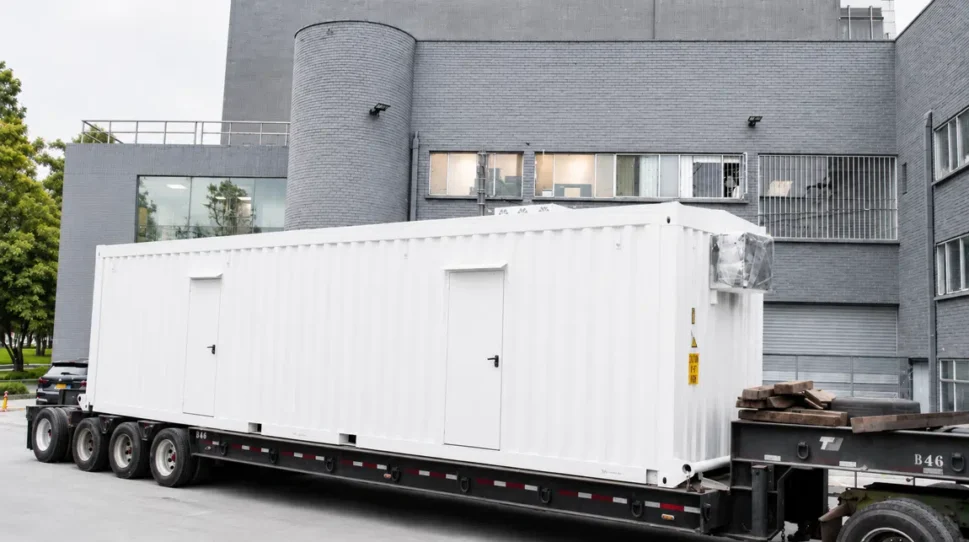
Building a traditional laboratory is often a lengthy and expensive process. Between architectural planning, permits, construction, equipment installation, and regulatory approvals, organizations may wait months—or even years—before research can begin. For projects with tight deadlines or evolving requirements, those delays can significantly impact productivity and innovation.
A container laboratory offers a practical alternative by providing a fully engineered laboratory that can be delivered, installed, and operational in a fraction of the time. Whether supporting scientific research, industrial testing, education, mining, or emergency response, these modular facilities combine speed, flexibility, and performance without sacrificing safety or quality.
A container laboratory is a self-contained laboratory facility designed within a shipping container that has been engineered to support scientific, industrial, or environmental applications.
Unlike conventional laboratories that require permanent construction, container laboratories are manufactured off-site under controlled conditions and delivered ready for installation. Depending on project requirements, they can include laboratory benches, ventilation systems, fume hoods, utility connections, storage, climate control, lighting, and specialized equipment.
Their biggest advantage is combining the functionality of a traditional laboratory with the flexibility of a modular structure.
Container laboratories are widely used in industries where mobility, rapid deployment, or temporary installations are essential, including research institutions, mining, oil and gas, healthcare, environmental monitoring, agriculture, and education.
The effectiveness of a container laboratory comes from its modular design and engineered integration.
• Modular Construction:
Each laboratory is manufactured before arriving on-site, allowing construction activities to occur simultaneously with site preparation. This significantly reduces overall project timelines.
• Fully Integrated Systems:
Container laboratories can incorporate electrical systems, plumbing, HVAC, ventilation, safety equipment, laboratory furniture, and specialized utilities according to the intended application.
Because these systems are integrated during manufacturing, installation becomes much faster and more predictable than traditional construction.
• Adaptable Interior Design:
The interior layout can be customized for chemistry, biology, quality control, environmental analysis, pharmaceutical testing, or numerous other applications.
Organizations can also configure workstations, storage, utilities, and equipment to match operational workflows.
Selecting the right container laboratory depends on more than simply choosing a container size.
• Define Your Laboratory Purpose:
The first step is identifying exactly how the laboratory will be used. A research laboratory requires different infrastructure than a quality control laboratory, a mining laboratory, or a mobile diagnostic facility.
• Consider Future Expansion:
Research projects evolve over time. Choosing a modular laboratory that allows additional units or future reconfiguration provides greater long-term flexibility than a fixed facility.
• Evaluate Mobility Requirements:
Some laboratories remain permanently installed, while others must be transported between multiple locations. Understanding transportation frequency helps determine structural design, utility connections, and equipment mounting requirements.
• Prioritize Safety Features:
Every laboratory should be designed around user safety. Ventilation, fire protection, emergency systems, chemical-resistant materials, and ergonomic workflows should all be evaluated before selecting a solution.
Before purchasing a container laboratory, verify several critical factors.
• Compliance with local building and laboratory regulations.
• HVAC and ventilation performance.
• Electrical capacity for laboratory equipment.
• Chemical-resistant finishes where applicable.
• Structural certifications for transportation.
• Utility accessibility for future maintenance.
• Manufacturer experience with laboratory projects.
Reviewing these factors before installation helps prevent unexpected costs while ensuring the laboratory performs as intended throughout its lifecycle.
| Feature | Container Laboratory | Traditional Laboratory |
|---|---|---|
|
Deployment Time |
Weeks |
Several months or longer |
|
Scalability |
High |
Limited |
|
Mobility |
Excellent |
None |
|
Construction Disruption |
Minimal |
Significant |
|
Future Expansion |
Easy |
Complex |
A traditional laboratory remains an excellent option for permanent, large-scale facilities with stable operational requirements. However, organizations that require rapid deployment, mobility, or future scalability often find that a container laboratory provides a far more practical solution. The right choice depends on project timelines, available budget, operational flexibility, and long-term research objectives.
Many organizations fail to maximize the value of a container laboratory because important planning decisions are overlooked.
• Choosing Based Only on Initial Cost:
The least expensive solution may not include the ventilation, utilities, or safety systems required for laboratory operations, resulting in expensive modifications later.
• Underestimating Utility Requirements:
Electrical capacity, HVAC systems, compressed air, water supply, and drainage should all be planned before installation to avoid operational limitations.
• Ignoring Future Growth:
Selecting a laboratory designed only for current needs can create expansion challenges as research programs evolve.
• Overlooking Transportation Conditions:
If the laboratory will be relocated regularly, structural reinforcement and equipment anchoring become critical considerations.
• Not Customizing the Interior Layout:
Every laboratory has unique workflows. Failing to optimize workstation placement, storage, and equipment locations can reduce operational efficiency.
A container laboratory is more than a faster alternative to conventional construction—it is a strategic solution for organizations that need flexibility, scalability, and reliable laboratory performance. By carefully defining operational requirements, planning for future growth, verifying safety standards, and selecting a manufacturer with laboratory expertise, organizations can create facilities that remain efficient for years to come.
Whether supporting research, industrial testing, education, healthcare, or remote operations, container laboratories offer an adaptable infrastructure capable of meeting today’s demands while remaining prepared for tomorrow’s challenges.
The container format supports a wider range of laboratory work than most people expect. Environmental testing and field sampling labs are the most common use case — water quality, soil analysis, and air monitoring — because they are often deployed at remote or temporary sites where permanent construction isn’t practical.
Quality control labs for manufacturing, food and beverage, cannabis, and pharmaceutical production are also a strong fit, particularly when a facility needs lab capacity quickly or in a location where expanding an existing building isn’t feasible. Research and development labs, mobile medical diagnostic units, and reference labs for government and defense applications have all been delivered in container format.
However, there are limits to what shipping container laboratory can support. Work requiring very large equipment footprints (such as mass spectrometry clusters or large-format autoclaves), high-containment biosafety levels (BSL‑3 or BSL‑4), or cleanroom environments stricter than ISO Class 7 generally require dedicated facility construction or significant additional engineering.
If you describe the specific assays, instruments, and throughput you need to support, Norlab can provide a direct answer on whether the container format is the right solution — or whether a conventional build would serve you better.
Steel containers have essentially no natural insulation and conduct heat and cold very efficiently, which makes HVAC design the most critical engineering component of a shipping container laboratory. Norlab addresses this with closed‑cell spray foam insulation applied to the interior walls, ceiling, and floor (R‑values typically between R‑20 and R‑30 depending on specification), combined with a properly sized HVAC system matched to the container’s volume, the heat load from equipment, the local climate, and the number of occupants.
In hot climates such as the desert Southwest or Gulf Coast, systems are sized to handle peak ambient temperatures above 110°F while maintaining stable interior lab conditions. In cold climates, the insulation package and heating capacity are specified accordingly. Altitude also matters: HVAC equipment in locations above 5,000 feet requires derating for reduced air density, so the system is designed around the specific GPS coordinates of the deployment site rather than a generic climate zone.
For labs requiring positive or negative pressure to meet contamination control or biosafety compliance, dedicated pressure management is built directly into the HVAC design. This ensures the container laboratory can operate reliably across a wide range of environmental conditions.
The regulatory framework depends on what the lab does, not on the fact that it’s a container. A container laboratory performing clinical diagnostics falls under CLIA. One handling controlled substances needs DEA registration. A food testing lab may require FDA registration. Environmental testing labs seeking accreditation must meet TNI/NELAC standards.
What changes with the shipping container laboratory format is the building and zoning layer: depending on the site, you may need a building permit for temporary or permanent placement, electrical and plumbing inspections, and local zoning clearance for the land use. Some jurisdictions treat container structures as temporary installations (easier permitting); others require the same process as a permanent building.
Norlab provides the technical documentation — structural specs, electrical layouts, HVAC specs, material certifications — that agencies typically require during the permit and inspection process. The regulatory strategy for your specific lab type and site location is something we work through during the design phase, not after.
Yes, and that’s one of the most significant advantages of the container laboratory format over conventional construction. The entire internal fit-out: cabinetry, countertops, equipment mounts, plumbing, electrical, and HVAC — is designed to be transport-stable. Relocating the unit requires a crane and flatbed truck, and the service connections (water, power, gas, data) are designed with quick-disconnect points at the exterior so they can be disconnected and reconnected at the new site without major rework.
The lab arrives at the new location essentially ready to reconnect and resume operations. One important note: any regulatory certifications or permits tied to the original site address will need to be reapplied at the new location, since those follow the address, not the unit.
A container laboratory typically costs 40 to 60 percent less than a conventional construction project of equivalent functional space. The savings come from multiple factors: no foundation or structural construction, dramatically shorter build time (which reduces carrying costs and gets your lab operational faster), and a single-source project where design, manufacturing, and installation are handled together.
The conventional build route involves architects, general contractors, specialty subcontractors, inspections, and permitting timelines that routinely stretch 12 to 24 months. A Norlab shipping container laboratory is designed, built, and installed in a fraction of that time. For organizations that need a lab operational quickly — a new field site, an expansion, a temporary facility during renovation — the cost comparison isn’t just about construction dollars. It’s about the cost of not having that lab running while a conventional build drags on.

Looking for a personalized quote on laboratory design or customized laboratory furniture?
We support your project with fully managed design & manufacturing solutions, ensuring every detail aligns with your workflow, safety needs, and performance requirements.
 Expert guidance included — free 3D design
Our lab safety specialists review your project personally.
 Fully custom — material, dimensions, configuration & finish
Furniture designed around your lab’s workflow, space constraints, and compliance requirements.
 American owned & operated — nationwide delivery
Manufactured and supported from Florida.