
In This Article, You’ll Learn: how HVAC systems maintain the environmental conditions required for laboratory performance, which system features have the greatest impact on temperature control, air quality, and regulatory compliance, what to evaluate before selecting a laboratory HVAC system, and how to choose the right solution for your laboratory or cleanroom.
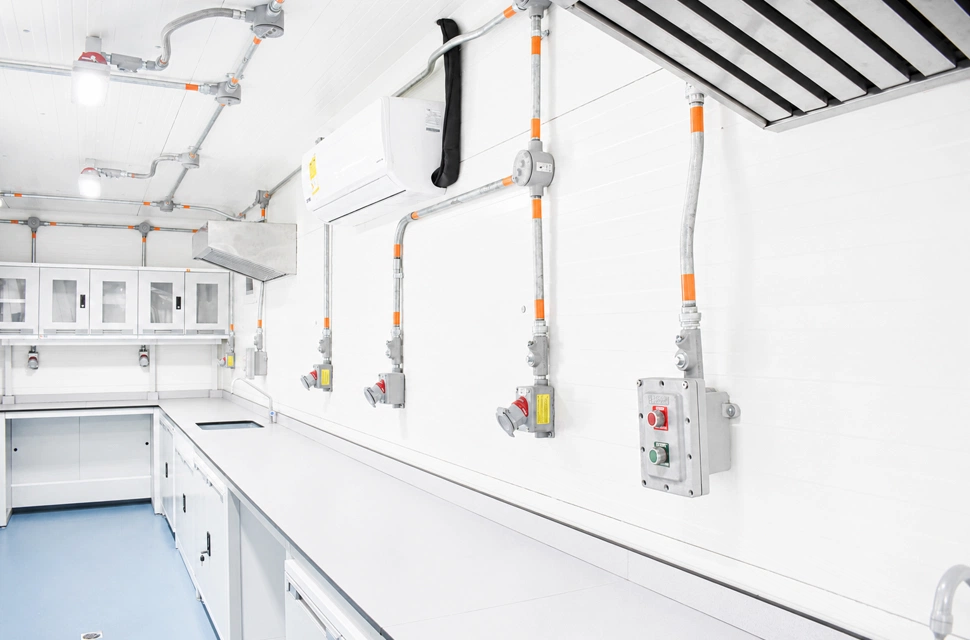
Laboratories depend on stable environmental conditions to produce accurate results, protect personnel, and maintain regulatory compliance. However, temperature fluctuations, poor airflow, inadequate humidity control, or incorrect room pressurization can compromise experiments, damage sensitive equipment, and increase contamination risks.
This is why HVAC systems are one of the most critical components of any laboratory. Beyond heating and cooling, they regulate airflow, pressure, humidity, and air quality to create a controlled environment that supports safe and reliable laboratory operations.
Heating, ventilation, and air conditioning systems are responsible for maintaining the environmental conditions required for laboratory operations. Unlike conventional commercial HVAC installations, laboratory systems must continuously control multiple environmental variables while supporting specialized equipment and preventing contamination.
A laboratory HVAC system typically manages:
• Temperature.
• Airflow.
• Humidity.
• Room pressurization.
• Air filtration.
• Ventilation rates.
Each of these elements contributes to laboratory safety, equipment reliability, and experimental accuracy.
Laboratory heating, ventilation, and air conditioning systems integrate several functions to maintain controlled environments.
• Airflow Management:
Proper airflow removes hazardous fumes, airborne particles, and contaminants before they accumulate inside the laboratory. Well-designed HVAC systems maintain directional airflow that helps contain hazardous substances while protecting clean work areas from contamination.
• Temperature Control:
Consistent temperature is essential for laboratory instruments, chemical stability, and repeatable research results. Modern HVAC systems continuously monitor and regulate temperature to maintain stable environmental conditions throughout the facility.
• Humidity Regulation:
Controlling humidity helps prevent microbial growth, protects sensitive materials, and reduces electrostatic discharge in laboratories handling electronic components or precision equipment. Maintaining balanced humidity also improves occupant comfort and equipment longevity.
• Pressure Control:
Many laboratories require positive or negative pressure rooms to prevent contaminants from moving between different operational areas.
HVAC systems continuously regulate pressure differentials to maintain safe separation between laboratory zones.
Selecting the appropriate HVAC system requires understanding both laboratory processes and facility requirements.
• Evaluate Laboratory Activities:
Different laboratory environments generate different environmental demands. Research laboratories, pharmaceutical facilities, healthcare laboratories, cleanrooms, and industrial testing centers each require different airflow, filtration, and pressure control strategies.
• Determine Ventilation Requirements:
The required air exchange rate depends on laboratory activities, hazardous materials, occupancy levels, and applicable regulations. Proper ventilation improves contaminant removal while supporting safe working conditions.
• Consider Energy Efficiency:
High-performance HVAC systems can incorporate variable air volume controls, energy recovery technologies, and intelligent building automation to reduce operating costs without sacrificing environmental control.
• Plan for Preventive Maintenance:
Routine maintenance is essential for maintaining airflow performance, filtration efficiency, and equipment reliability throughout the system’s operational life.
Before selecting heating, ventilation, and air conditioning systems, verify:
• Airflow capacity.
• Temperature control accuracy.
• Humidity regulation capability.
• Pressure control performance.
• Filtration efficiency.
• Energy consumption.
• Maintenance accessibility.
• Compliance with laboratory ventilation standards.
Evaluating these factors helps ensure the HVAC system meets both current operational requirements and future laboratory expansion needs.
| Feature | Standard Commercial HVAC | Laboratory HVAC Systems |
|---|---|---|
|
Temperature Control |
Good |
Precision Control |
|
Airflow Management |
General Comfort |
Contamination Control |
|
Humidity Control |
Basic |
Precise Regulation |
|
Pressure Differentials |
Limited |
Continuous Monitoring |
|
Air Filtration |
Standard |
High-Efficiency Filtration |
|
Laboratory Applications |
Limited |
Designed for Scientific Environments |
Although commercial HVAC systems provide comfortable indoor conditions, they are not engineered for laboratory environments. Laboratory HVAC systems deliver the precise environmental control necessary to support research activities, hazardous processes, contamination control, and regulatory compliance. Choosing the appropriate system depends on laboratory complexity, operational risks, and environmental control requirements.
Many laboratory performance issues originate from inadequate environmental control rather than equipment failures.
• Treating Laboratory HVAC Like Office Ventilation:
Commercial HVAC systems typically cannot provide the airflow, filtration, or pressure control required for laboratory operations.
• Ignoring Pressure Relationships:
Improper room pressurization increases the risk of cross-contamination and reduces laboratory safety.
• Overlooking Preventive Maintenance:
Dirty filters, worn mechanical components, and poorly calibrated controls reduce HVAC performance while increasing operating costs.
• Prioritizing Initial Cost Over Performance:
Selecting undersized or simplified systems often results in higher energy consumption, reduced reliability, and costly future upgrades.
• Failing to Plan for Laboratory Expansion:
Laboratories frequently evolve over time, making scalable HVAC systems a better long-term investment than systems designed only for current requirements.
Heating, ventilation, and air conditioning systems systems are the foundation of every high-performing laboratory because they create the controlled environmental conditions required for safe, accurate, and reliable operations. By selecting systems that provide precise airflow, temperature regulation, humidity control, pressure management, and efficient ventilation, laboratories can improve safety, protect valuable equipment, and support long-term operational success. Investing in properly engineered HVAC systems is not simply an infrastructure decision—it is a strategic investment in laboratory performance, compliance, and future growth.
HVAC systems in laboratories must control contamination, pressure differentials, humidity, and ventilation in addition to temperature, making them significantly more complex than conventional commercial HVAC installations.
Yes. Modern HVAC systems incorporate technologies such as variable air volume controls, energy recovery systems, and intelligent automation that reduce energy consumption while maintaining precise environmental control.
Routine inspections help ensure HVAC systems continue operating efficiently by verifying airflow performance, filter condition, pressure control, temperature stability, and overall system reliability according to the laboratory’s maintenance program.
Yes. HVAC systems can be engineered specifically for research laboratories, pharmaceutical facilities, cleanrooms, healthcare environments, industrial laboratories, and other specialized applications with unique environmental requirements, for example: shipping container laboratory
When evaluating suppliers, choose a manufacturer with proven experience designing HVAC systems for laboratories, expertise in environmental control, compliance with industry standards, customization capabilities, energy-efficient solutions, and comprehensive technical support.

Looking for a personalized quote on laboratory design or customized laboratory furniture?
We support your project with fully managed design & manufacturing solutions, ensuring every detail aligns with your workflow, safety needs, and performance requirements.
 Expert guidance included — free 3D design
Our lab safety specialists review your project personally.
 Fully custom — material, dimensions, configuration & finish
Furniture designed around your lab’s workflow, space constraints, and compliance requirements.
 American owned & operated — nationwide delivery
Manufactured and supported from Florida.