
In This Article, You’ll Learn: how laboratory fittings support safe, efficient laboratory operations, which fittings have the greatest impact on performance, safety, and workflow, what to evaluate before selecting laboratory fittings, and how to choose the right components for your laboratory.
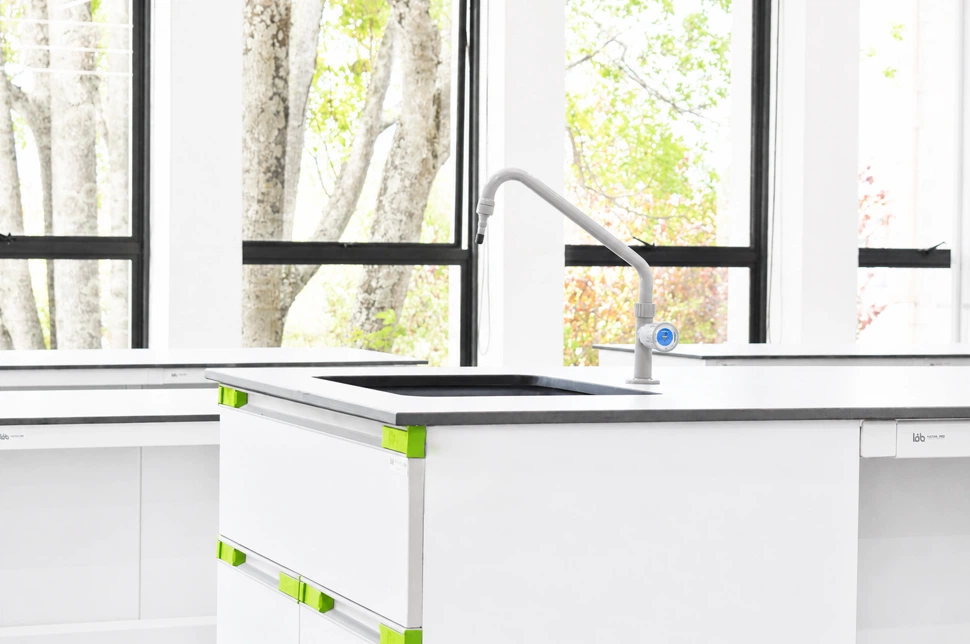
When designing a laboratory, it’s easy to focus on large investments such as casework, countertops, and analytical equipment. However, many laboratory failures originate from much smaller components. Poorly selected fittings can cause leaks, inconsistent utility delivery, equipment downtime, and even serious safety incidents that interrupt laboratory operations.
Laboratory fittings are responsible for controlling the distribution of water, gases, vacuum, air, and other essential utilities throughout the laboratory. Choosing the right fittings is critical for ensuring safe operation, reliable performance, and long-term durability.
Laboratory fittings are engineered components that control the safe delivery and regulation of utilities used during laboratory operations. Unlike standard plumbing fixtures, laboratory fittings are specifically designed to withstand chemical exposure, continuous operation, frequent cleaning, and demanding working conditions.
Depending on the laboratory application, fittings may control:
• Water supply
• Natural gas
• Specialty gases
• Vacuum systems
• Compressed air
• Deionized water
Because these systems directly support laboratory equipment and experimental procedures, reliability is essential for both safety and productivity.
The performance of laboratory fittings depends on several critical engineering characteristics.
• Chemical-Resistant Materials:
Material selection directly affects durability and long-term performance. High-quality laboratory fittings are commonly manufactured from brass, stainless steel, or chemically resistant finishes that withstand corrosion, moisture, and aggressive laboratory environments.
• Precision Flow Control:
Laboratory fittings regulate utility flow while maintaining stable pressure and reliable operation. Properly engineered valves help ensure accurate control during laboratory procedures while reducing the risk of leaks or pressure fluctuations.
• Secure Connections:
Reliable sealing systems prevent utility leaks and maintain system integrity. Well-designed fittings use precision manufacturing and durable sealing components to provide dependable long-term performance under continuous use.
• Integrated Safety Features:
Many modern laboratory fittings include emergency shut-off valves, color-coded identification, anti-rotation designs, and pressure control mechanisms that improve operational safety and simplify daily use.
Selecting laboratory fittings requires evaluating both laboratory operations and utility system requirements.
• Match Fittings to the Utility System:
Each utility requires fittings specifically designed for its operating conditions. Water, gas, vacuum, compressed air, and specialty gases all have different pressure, compatibility, and safety requirements.
• Verify Material Compatibility:
The fitting material should be compatible with the chemicals, cleaning agents, and environmental conditions present in the laboratory to maximize service life.
• Evaluate Installation Requirements:
Selecting fittings that integrate easily with laboratory casework, service fixtures, and utility distribution systems simplifies installation while reducing future maintenance.
• Consider Future Maintenance:
Laboratories benefit from fittings that provide easy access for inspection, servicing, and replacement without requiring major modifications to surrounding infrastructure.
Before selecting laboratory fittings, verify:
• Material compatibility
• Utility compatibility
• Operating pressure ratings
• Corrosion resistance
• Safety features
• Certification compliance
• Installation requirements
• Manufacturer experience with laboratory utility systems
Reviewing these factors helps ensure reliable performance while reducing maintenance and operational risks.
| Feature | Standard Commercial Fittings | Laboratory Fittings |
|---|---|---|
|
Chemical Resistance |
Limited |
Excellent |
|
Corrosion Protection |
Moderate |
High |
|
Utility Compatibility |
General Plumbing |
Laboratory Utilities |
|
Safety Features |
Basic |
Advanced |
|
Service Life |
Moderate |
Long-Term |
Although commercial fittings may appear similar, they are not designed for the demanding conditions found in laboratories. Laboratory fittings provide superior durability, chemical resistance, utility compatibility, and safety features that support reliable operation over many years. Selecting purpose-built fittings helps reduce maintenance costs while improving laboratory safety.
Many laboratory utility problems begin with poor fitting selection rather than equipment failure.
• Selecting Fittings Based Only on Cost:
Lower-cost components often lack the durability and chemical resistance required for continuous laboratory use.
• Ignoring Utility Compatibility:
Using fittings that are not designed for the intended utility can lead to leaks, pressure problems, or premature failure.
• Overlooking Installation Quality:
Improper installation may compromise sealing performance, create hidden leaks, and shorten equipment lifespan.
• Neglecting Preventive Maintenance:
Routine inspections help identify wear, corrosion, or damaged seals before they develop into operational failures.
• Choosing General Plumbing Components:
Commercial plumbing fittings rarely provide the performance, safety, or durability required for laboratory environments.
Laboratory fittings may be among the smallest components in a laboratory, but they have a significant impact on safety, efficiency, and long-term operational reliability. By selecting fittings designed specifically for laboratory applications, verifying compatibility with utility systems, and prioritizing quality over initial cost, organizations can reduce maintenance, improve safety, and support uninterrupted laboratory operations. Investing in high-quality laboratory fittings is a practical decision that strengthens the performance of the entire laboratory infrastructure.
The lifespan of lab fittings depends on the materials, operating conditions, maintenance practices, and the utilities they handle. High-quality fittings designed for laboratory environments can provide reliable performance for many years with proper maintenance.
Yes. Modern lab fittings are available in numerous configurations for water, gas, vacuum, compressed air, and specialty utilities, allowing laboratories to customize systems according to their operational requirements.
In many cases, lab fittings can be integrated into existing utility infrastructure, provided the fittings match the required pressure ratings, connection types, and applicable laboratory standards.
Routine inspections help ensure lab fittings continue operating safely and efficiently. The inspection frequency depends on laboratory usage, utility type, and internal maintenance programs, but periodic preventive maintenance is always recommended.
When evaluating suppliers, choose a manufacturer with proven experience designing lab fittings, high-quality materials, recognized certifications, customization capabilities, technical support, and products specifically engineered for laboratory utility systems.

Looking for a personalized quote on laboratory design or customized laboratory furniture?
We support your project with fully managed design & manufacturing solutions, ensuring every detail aligns with your workflow, safety needs, and performance requirements.
 Expert guidance included — free 3D design
Our lab safety specialists review your project personally.
 Fully custom — material, dimensions, configuration & finish
Furniture designed around your lab’s workflow, space constraints, and compliance requirements.
 American owned & operated — nationwide delivery
Manufactured and supported from Florida.