
In This Article, You’ll Learn: how laboratory seating affects operator comfort, productivity, and long-term health, which ergonomic features have the greatest impact on daily performance, what to evaluate before selecting laboratory seating, and how to choose the right solution for your laboratory.
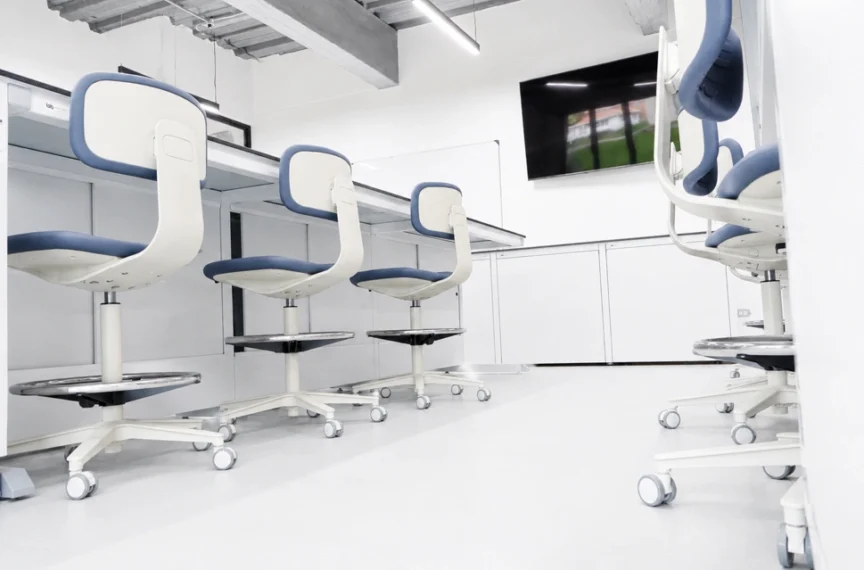
Choosing laboratory seating is often treated as a minor purchasing decision, yet the wrong chair can significantly affect operator comfort, productivity, and workplace safety. A poorly designed chair contributes to fatigue, poor posture, repetitive strain, and reduced concentration, especially during long laboratory procedures.
This is why laboratory seating should be selected based on ergonomic performance, durability, adjustability, and compatibility with laboratory tasks. Understanding what to evaluate before purchasing helps laboratories create healthier work environments while improving operational efficiency and long-term value.
Laboratory seating is purpose-built to support laboratory personnel during extended periods of scientific work while withstanding the unique conditions found in research, healthcare, industrial, and educational laboratories. Unlike conventional office chairs, laboratory seating is designed to resist chemicals, tolerate frequent cleaning, provide ergonomic support, and adapt to different laboratory workstations. The right chair improves operator comfort while reducing physical strain throughout the workday.
Choosing the right Laboratory Seating involves evaluating several important performance factors.
• Ergonomic Design:
Ergonomics is the most important consideration when selecting laboratory seating. Features such as lumbar support, adjustable backrests, seat depth, and synchronized movement help maintain proper posture, reducing muscle fatigue during repetitive or prolonged laboratory tasks.
• Adjustability:
Laboratory personnel perform different tasks throughout the day, making adjustability essential. Height adjustment, seat tilt, backrest positioning, armrests, and foot support allow laboratory seating to accommodate different users and workstation configurations while promoting healthy body alignment.
• Mobility and Stability:
Laboratories require frequent movement between instruments, benches, and workstations. High-quality laboratory seating combines smooth mobility with excellent stability through durable casters, swivel mechanisms, and stable base designs that improve efficiency without compromising safety.
• Material Performance:
Laboratory environments expose seating to chemicals, disinfectants, moisture, and continuous use. Materials used in laboratory seating should be easy to clean, resistant to laboratory chemicals, durable under daily use, and capable of maintaining comfort throughout years of operation.
Selecting the best laboratory chair begins with understanding how it will be used.
• Match the Chair to the Laboratory Task:
Different laboratory activities require different seating solutions. Precision work, microscopy, analytical procedures, cleanroom operations, and standing-height workstations all benefit from chairs specifically designed for those applications.
• Evaluate Ergonomic Features:
Choose laboratory seating that allows operators to customize the chair according to their body dimensions and daily activities. Greater adjustability improves comfort while reducing the risk of musculoskeletal injuries.
• Consider Laboratory Conditions:
Exposure to chemicals, disinfectants, humidity, and intensive cleaning should influence material selection. laboratory seating should maintain both its appearance and structural integrity under demanding environmental conditions.
• Think About Long-Term Durability:
A quality laboratory chair represents a long-term investment. Durable construction, high-performance materials, and reliable adjustment mechanisms reduce maintenance requirements and extend product lifespan.
Before selecting laboratory seating, verify the following:
• Ergonomic adjustability.
• Lumbar support.
• Seat height range.
• Weight capacity.
• Mobility and stability.
• Chemical-resistant materials.
• Ease of cleaning.
• Warranty and product durability.
Reviewing these factors helps laboratories choose seating that provides long-term comfort, reliability, and performance.
| Feature | Standard Office Chair | Laboratory Chairs |
|---|---|---|
|
Ergonomic Adjustability |
Basic |
Advanced |
|
Chemical Resistance |
Limited |
High |
|
Easy Cleaning |
Moderate |
Excellent |
|
Durability |
Standard Office Use |
Laboratory Environment |
|
Mobility |
Standard |
Optimized for Laboratory Tasks |
|
Long-Term Operator Comfort |
Moderate |
Excellent |
Although office chairs may appear suitable, they are not designed for laboratory environments. Purpose-built laboratory seating offers superior ergonomic support, better material performance, easier maintenance, and greater durability under continuous laboratory use.
Many laboratories reduce operator comfort by overlooking key selection criteria.
• Choosing Chairs Based Only on Price:
Lower-cost laboratory seating often sacrifices ergonomics, durability, and long-term comfort, leading to higher replacement costs.
• Ignoring Ergonomic Adjustability:
A chair that cannot adapt to different users increases fatigue and reduces operator efficiency.
• Selecting Materials Unsuitable for Laboratory Use:
Laboratory seating should resist chemicals, moisture, and frequent cleaning to maintain long-term performance.
• Forgetting Task Requirements:
Different laboratory procedures require different seating configurations. Selecting one chair for every application may reduce both comfort and productivity.
• Overlooking Product Quality:
High-quality laboratory seating provides better structural durability, smoother adjustments, and more reliable long-term performance than lower-grade alternatives.
Selecting the right laboratory seating is an investment in operator health, laboratory productivity, and long-term operational efficiency. By evaluating ergonomic design, adjustability, materials, mobility, and application requirements, laboratories can choose seating solutions that improve comfort while supporting demanding scientific work. Well-designed laboratory seating helps reduce physical strain, increase productivity, and create safer laboratory environments where personnel can perform at their best every day.
The four laboratory chair models cover different task profiles. The polyurethane model (LWS5001) with its contoured backrest and mid-range seat height (14.2″–18.1″) is designed for standard bench work — analytical balances, sample preparation, and general lab tasks at a 30″–36″ bench height. The polypropylene model (NLD3556C) has the widest seat height range (22″–31.9″), making it the right choice for high-bench or standing-height workstations, fume hood work, and any application where operators alternate between sitting and near-standing positions.
The Nylon Mesh model (LWSFS02-3M) with its wider seat depth (19.7″) and backrest (18.5″) provides the most ergonomic support for prolonged seated work — extended micropipetting sessions, microscopy, or data entry — where sustained lower back support matters most. The Polyethylene model (LWSA3003) is the most chemically aggressive-environment option, with a surface that tolerates harsher disinfection protocols.
If your lab has multiple workstation types, Norlab recommends specifying different models for different zones rather than one model for the entire facility.
Seat height selection is one of the most overlooked decisions in laboratory chairs procurement, and getting it wrong leads directly to musculoskeletal complaints within months of installation. The ergonomic rule is that the operator’s elbow should be at or slightly above the work surface when seated with shoulders relaxed.
For standard lab benches at 30″–34″ height, a seat height range of 14″–18″ is appropriate — covered by the LWS5001, LWSFS02-3M, and LWSA3003 models. For high benches at 36″–42″ height or fume hood sash openings at 35″–40″ working height, the NLD3556C with its 22″–31.9″ seat height range is the correct specification. If your facility has both standard and high benches, you need two different models — one chair model cannot cover both height ranges ergonomically.
This is a detail Norlab’s team confirms during the design consultation by reviewing your actual bench height specifications.
Cleaning and disinfection compatibility depends on both the upholstery material and the frequency and concentration of the agents used. Polyurethane (LWS5001) handles regular wiping with 70% isopropanol, quaternary ammonium compounds, and diluted bleach solutions (up to 10% sodium hypochlorite) without surface degradation — making it the most versatile option for labs with routine disinfection protocols.
Polypropylene (NLD3556C) is molded plastic with no upholstery seams, which means no absorption and tolerance for more aggressive cleaning agents including undiluted disinfectants and some solvent wipes — the right choice for labs with stringent decontamination requirements. Nylon Mesh (LWSFS02-3M) tolerates standard disinfection wipes and sprays but is not suitable for environments requiring total surface saturation or autoclave-compatible cleaning, as the mesh structure can trap moisture and reagent residue over time.
Polyethylene (LWSA3003) offers the highest chemical resistance of the four for surface cleaning. For labs in pharmaceutical manufacturing or cleanroom-adjacent environments where cleaning validation is documented, Norlab provides material compatibility data for your specific disinfectant protocol.
These two certifications answer different questions. ANSI/BIFMA X5.1 is the foundational US seating standard for laboratory chairs: it tests structural integrity, load capacity, stability, caster durability, and resistance to impact — essentially confirming that lab chairs will not fail mechanically under normal use conditions.
This is the minimum performance benchmark for commercial seating products. SEFA 12 is specific to laboratory environments and goes further: it adds requirements for chemical resistance of upholstery and surface materials, cleanability, ergonomic adjustability ranges appropriate for laboratory work postures, and durability under the sanitization cycles typical in lab settings. Laboratory chairs can pass ANSI/BIFMA testing and still not be suitable for laboratory use.
SEFA 12 compliance is what specifically qualifies laboratory chairs for laboratory environments. For institutional procurement, pharmaceutical facilities, research centers, and any laboratory subject to OSHA inspection or accreditation review, SEFA 12 compliance is the specification to require — not just ANSI/BIFMA certification for laboratory chairs.
Under normal daily lab use, Norlab laboratory chairs built to ANSI/BIFMA X5.1 and SEFA 12-2025 standards are designed for 8 to 12 years of service life. The structural frame — heavy-duty steel — will typically outlast every other component in the chair. What drives premature deterioration falls into three categories.
First, cleaning agent incompatibility: using bleach concentrations above 10%, acetone-based wipes, or solvent-based sprays on polyurethane or nylon mesh upholstery breaks down the surface faster than normal wear — this is the most common cause of early upholstery failure in lab environments.
Second, exceeding the weight capacity rating: sustained overloading accelerates fatigue in the gas cylinder, caster axles, and seat pan structure well ahead of the rated service life.
Third, ignoring early hardware wear: a gas cylinder that’s losing adjustment range or a cracked caster that’s compensating unevenly puts abnormal stress on the frame and accelerates failure across multiple components simultaneously.
All hardware components — cylinders, casters, armrests — are field-replaceable, so premature deterioration is almost always preventable with a basic annual inspection and prompt replacement of the first component that shows wear.

Looking for a personalized quote on laboratory design or customized laboratory furniture?
We support your project with fully managed design & manufacturing solutions, ensuring every detail aligns with your workflow, safety needs, and performance requirements.
 Expert guidance included — free 3D design
Our lab safety specialists review your project personally.
 Fully custom — material, dimensions, configuration & finish
Furniture designed around your lab’s workflow, space constraints, and compliance requirements.
 American owned & operated — nationwide delivery
Manufactured and supported from Florida.