
In This Article, You’ll Learn: how laboratory worktop materials affect durability, chemical resistance, and long-term performance, which surface materials have the greatest impact on safety and laboratory operations, what to evaluate before selecting a worktop, and how to choose the right solution for your laboratory.
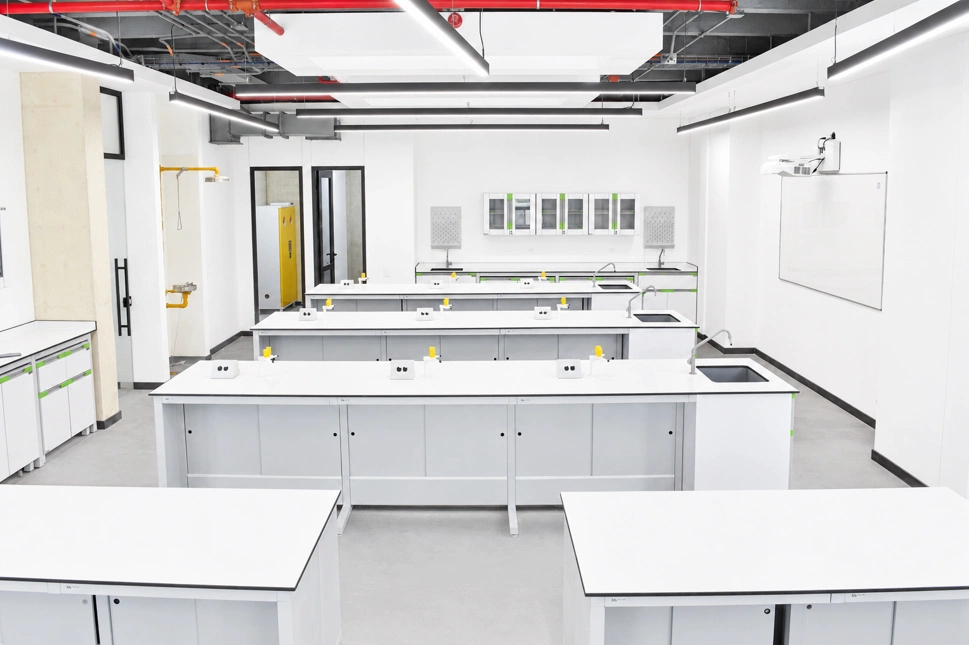
Selecting laboratory furniture often focuses on cabinets, equipment, and layout, but one of the most important decisions is frequently underestimated: the work surface. Laboratory worktops are exposed daily to chemicals, heat, moisture, impacts, heavy equipment, and continuous cleaning. Choosing the wrong material can lead to premature deterioration, contamination risks, costly replacements, and reduced laboratory efficiency.
This is why selecting the right laboratory worktops is essential during any laboratory project. Different materials are designed for different applications, and no single surface is ideal for every environment. Understanding the strengths and limitations of each option allows laboratories to choose a solution that delivers the best balance of durability, safety, maintenance, and long-term value.
Laboratory worktops are more than simple work surfaces—they directly influence laboratory performance, safety, and operational efficiency. Every laboratory has unique environmental conditions, chemical laboratories prioritize chemical resistance, microbiology laboratories emphasize hygiene, industrial laboratories require structural strength, while research facilities often need a balance between durability and versatility. Choosing the correct worktop begins by understanding how each material performs under real laboratory conditions.
• Phenolic Worktops:
Phenolic worktops are manufactured by compressing multiple layers of kraft paper impregnated with thermosetting resins under high pressure and temperature. The result is a dense, non-porous surface that offers an excellent balance between durability, moisture resistance, and chemical performance. Phenolic worktops provide excellent resistance to:
• Moisture and humidity
• Diluted acids
• Alkalis
• Alcohols
• Common laboratory cleaning agents
• Daily abrasion and impacts
Unlike wood-based materials, phenolic surfaces do not swell, delaminate, or lose structural integrity when exposed to water or frequent cleaning. Their non-porous construction also helps maintain hygienic conditions by preventing moisture absorption. Mechanically, phenolic worktops offer excellent resistance to scratches, impacts, and everyday wear, making them suitable for laboratories with continuous use. They also tolerate moderate heat, although direct contact with very hot equipment should be avoided.
• Epoxy Worktops:
Epoxy resin is considered one of the highest-performing materials available for laboratory worktops, particularly in environments where aggressive chemicals are handled daily. Unlike laminated materials, epoxy resin is a solid, homogeneous surface that remains chemically stable throughout its entire thickness. Because there is no outer coating that can wear away, the material maintains its chemical resistance even after years of use. Epoxy worktops provide exceptional resistance to:
• Strong mineral acids
• Organic solvents
• Oxidizing agents
• Corrosive chemicals
• Biological reagents
In addition to chemical resistance, epoxy resin withstands high temperatures without deforming and tolerates heavy equipment with minimal structural deflection. Its non-porous surface prevents liquid absorption, reducing contamination risks and making routine cleaning easier.
• Ceramic Worktops:
Ceramic worktops offer one of the highest levels of performance available for demanding scientific environments. The firing process used during manufacturing creates an extremely hard, inert surface that is highly resistant to abrasion, scratching, staining, and virtually every laboratory chemical. Ceramic worktops provide outstanding resistance to:
• Concentrated acids
• Strong alkalis
• Organic solvents
• Oxidizing chemicals
• Thermal shock
Unlike many other materials, ceramic can tolerate direct contact with extremely hot laboratory equipment without warping or losing structural stability.Its extremely low porosity also prevents chemical absorption, making cleaning simple while maintaining long-term hygienic performance.
• Acrylic Worktops:
Acrylic worktops are valued primarily for their seamless construction and ease of maintenance rather than extreme chemical resistance. One of their biggest advantages is that joints can be virtually invisible, creating continuous surfaces that minimize areas where contaminants can accumulate. The material offers good resistance to moisture and common laboratory cleaning agents while providing a smooth, hygienic surface that is easy to disinfect. However, acrylic is less resistant than epoxy or ceramic when exposed to:
• Strong acids
• Aggressive solvents
• High temperatures
• Heavy abrasion
Surface scratches can occur over time, although one important advantage is that many acrylic surfaces can be repaired or refinished, extending their service life. For laboratories where aesthetics, hygiene, and repairability are priorities, acrylic remains an excellent option.
• Stainless Steel Worktops:
Stainless steel has long been considered the standard material for environments where hygiene is the highest priority. Its non-porous metallic surface prevents bacterial growth, resists corrosion, and tolerates frequent exposure to disinfectants without degrading. Stainless steel worktops provide excellent resistance to:
• Moisture
• Steam
• Biological contamination
• Cleaning chemicals
• Mechanical impacts
Unlike resin-based materials, stainless steel also tolerates repeated thermal cycling without cracking. However, it is generally less resistant than epoxy or ceramic to certain concentrated acids and chloride-containing chemicals, which can eventually affect the protective oxide layer if exposure is prolonged. Although surface scratches are common during normal use, they rarely affect structural performance or hygienic properties.
Choosing the best laboratory worktops depends on understanding the operational requirements of the laboratory.
• Identify the Laboratory Application:
Different laboratory activities require different performance characteristics, chemical laboratories require maximum chemical resistance, while biological laboratories often prioritize hygiene and cleanability.
• Evaluate Chemical Exposure:
Consider the chemicals that will contact the work surface daily, highly corrosive substances generally require epoxy resin or ceramic, while moderate exposure can often be handled by phenolic surfaces.
• Consider Heat Resistance:
Some laboratories routinely work with hot equipment or open flames, in these environments, ceramic and epoxy surfaces generally provide better long-term performance than acrylic materials.
• Think About Cleaning Requirements:
Frequent cleaning is essential in every laboratory, select laboratory worktops that are compatible with your cleaning procedures and resistant to disinfectants, moisture, and repeated sanitation cycles.
• Balance Performance and Budget:
The most expensive material is not always the best choice, selecting the surface that matches your actual laboratory conditions provides better long-term value than overspecifying or underspecifying the worktop material.
Before selecting laboratory worktops, verify:
• Chemical resistance requirements.
• Heat resistance capabilities.
• Moisture resistance.
• Impact and abrasion resistance.
• Cleaning and maintenance requirements.
• Expected service life.
• Compatibility with laboratory applications.
• Total lifecycle cost rather than purchase price alone.
Reviewing these factors helps ensure the selected surface provides reliable performance throughout the life of the laboratory.
| Property | Phenolic | Epoxy | Ceramic | Acrylic | Stainless Steel |
|---|---|---|---|---|---|
|
Chemical resistance |
High |
Excellent |
Excellent |
Moderate |
High |
|
Heat resistance |
Good |
Excellent |
Outstanding |
Moderate |
Excellent |
|
Moisture resistance |
Excellent |
Excellent |
Excellent |
Excellent |
Excellent |
|
Abrasion resistance |
High |
High |
Outstanding |
Moderate |
High |
|
Impact resistance |
High |
High |
Moderate |
Moderate |
Excellent |
Many laboratories encounter premature worktop failures because material selection is based on assumptions rather than application requirements.
• Choosing Based Only on Price:
Lower-cost materials may require earlier replacement, increasing lifecycle costs.
• Ignoring Chemical Compatibility:
Not every surface resists every chemical. Selecting the wrong material can lead to permanent damage and contamination risks.
• Overlooking Heat Exposure:
Laboratories using hot equipment should verify temperature resistance before selecting worktops.
• Prioritizing Appearance Over Performance:
A visually attractive surface may not provide the durability required for demanding laboratory environments.
• Selecting One Material for Every Laboratory:
Different departments often require different Laboratory Worktops. Using the same surface throughout an entire facility may reduce overall performance.
Selecting the right laboratory worktops is one of the most important decisions in laboratory planning because the work surface directly affects durability, safety, maintenance, and daily productivity. By understanding how phenolic, epoxy resin, ceramic, acrylic, and stainless steel perform under different laboratory conditions, organizations can choose surfaces that match their operational requirements while minimizing maintenance and replacement costs. Rather than focusing only on the initial purchase price, laboratories should evaluate long-term performance, chemical resistance, hygiene, and expected service life to ensure their laboratory worktops continue delivering reliable performance for years to come.
Yes. All laboratory worktops manufactured by Norlab comply with SEFA 3 standards, which establish performance requirements for laboratory work surfaces including chemical resistance, structural load capacity, durability, and surface flatness tolerances.
SEFA compliance is especially important for facilities subject to FDA inspections, CAP accreditation, DEA registration, or GMP compliance audits because inspectors frequently review work surface specifications during evaluations. Norlab includes all required compliance documentation as part of the project delivery rather than treating it as an optional add-on. If your facility requires additional certifications or specialized standards, those requirements can also be incorporated into the final laboratory worktops specification during the design phase.
For laboratories handling highly corrosive chemicals, laboratory worktops made from epoxy resin or ceramic generally provide the highest level of chemical resistance and long-term durability.
Stainless steel worktops provide excellent hygiene, corrosion resistance, and compatibility with frequent cleaning procedures, making them ideal for hospitals, pharmaceutical facilities, biotechnology laboratories, and cleanrooms.
Selecting laboratory worktops begins by evaluating chemical exposure, temperature requirements, hygiene standards, maintenance expectations, and the specific activities performed in each laboratory area.
Yes. Many facilities combine different laboratory worktops throughout the project, selecting each material according to the operational requirements of individual departments to optimize performance, durability, and overall project cost.

Looking for a personalized quote on laboratory design or customized laboratory furniture?
We support your project with fully managed design & manufacturing solutions, ensuring every detail aligns with your workflow, safety needs, and performance requirements.
 Expert guidance included — free 3D design
Our lab safety specialists review your project personally.
 Fully custom — material, dimensions, configuration & finish
Furniture designed around your lab’s workflow, space constraints, and compliance requirements.
 American owned & operated — nationwide delivery
Manufactured and supported from Florida.