
In This Article, You’ll Learn: how mobile fume extractors improve air quality by capturing hazardous fumes at the source, which performance features have the greatest impact on contaminant removal and operator safety, what to evaluate before selecting a portable extraction system, and how to choose the right solution for your laboratory or industrial workspace.
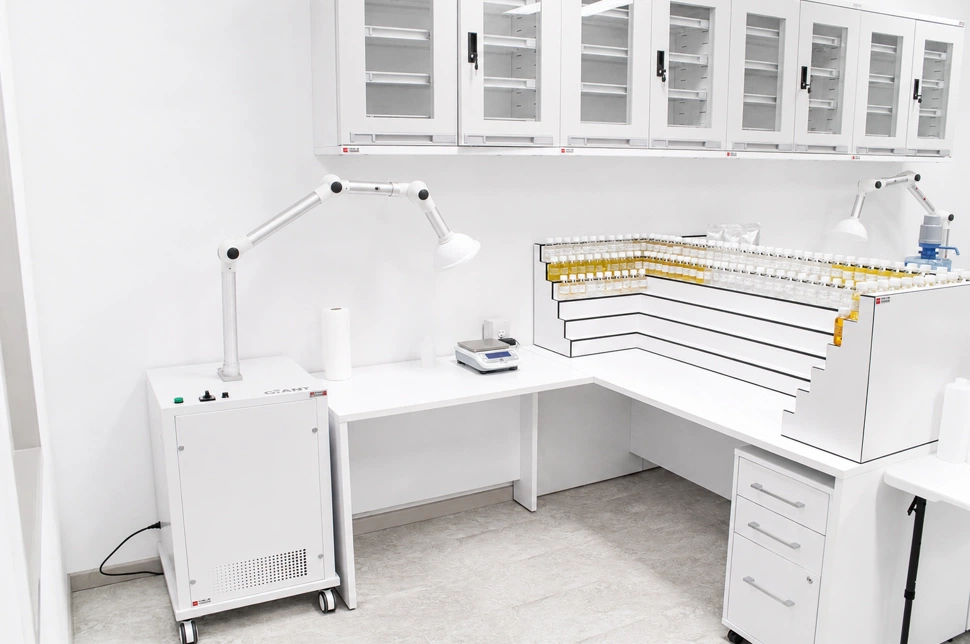
Maintaining clean indoor air is essential for protecting laboratory personnel, preserving sample integrity, and ensuring regulatory compliance. However, many laboratories perform processes in multiple locations where installing permanent extraction systems is either impractical or too expensive. As a result, hazardous fumes, vapors, and airborne particles may remain in the workspace longer than expected, increasing health risks and reducing operational efficiency.
A mobile fume extractor offers a flexible solution by capturing contaminants directly at the source wherever extraction is needed. Unlike fixed ventilation systems, it can be repositioned between workstations, providing targeted air filtration without requiring major facility modifications.
A mobile fume extractor is a portable local exhaust ventilation system designed to remove airborne contaminants before they disperse throughout the laboratory. Unlike centralized ventilation systems that manage air for an entire facility, mobile extractors focus on specific workstations where fumes or particles are generated. This localized approach provides greater flexibility while reducing unnecessary energy consumption.
Mobile extractors are commonly used in laboratories, electronics manufacturing, pharmaceutical production, research facilities, welding applications, laser processing, and other environments where temporary or changing workstations require effective air quality control. Their primary purpose is to improve worker safety by capturing contaminants as close as possible to their source.
A mobile fume extractor combines localized capture with advanced filtration technologies to improve indoor air quality.
• Source Capture:
The extraction arm is positioned close to the point where fumes, smoke, or airborne particles are generated. Capturing contaminants immediately prevents them from spreading throughout the laboratory and significantly reduces operator exposure.
• Multi-Stage Filtration:
Depending on the application, mobile fume extractors may incorporate HEPA filters, activated carbon filters, or multi-stage filtration systems. These technologies remove fine particulate matter, chemical vapors, odors, and other airborne contaminants before filtered air is safely returned or exhausted.
• Portable Design:
Unlike fixed extraction systems, mobile units can be relocated quickly between workstations. This flexibility allows one extractor to support multiple laboratory activities while adapting to changing operational requirements.
• Independent Operation:
Most mobile fume extractors operate independently from the building’s HVAC system, allowing laboratories to improve local air quality without modifying existing ventilation infrastructure.
Selecting the right mobile fume extractor depends on the contaminants generated and the laboratory’s operational needs.
• Identify the Type of Contaminants:
Different applications generate different airborne hazards. Chemical vapors, soldering fumes, laser smoke, pharmaceutical powders, and fine particulate matter often require different filtration technologies.
• Select the Appropriate Filtration System:
HEPA filtration is ideal for capturing fine particles, while activated carbon filters are commonly used to remove chemical vapors and odors. Some applications benefit from combining multiple filtration stages to maximize contaminant removal.
• Evaluate Mobility Requirements:
Laboratories with frequently changing workflows should prioritize compact, lightweight units that can be easily repositioned between workstations without interrupting operations.
• Consider Maintenance Requirements:
Filters require periodic replacement to maintain extraction efficiency. Selecting equipment with easy filter access and straightforward maintenance procedures reduces downtime and helps ensure consistent long-term performance.
Before selecting a mobile fume extractor, verify the following:
• Airflow capacity.
• Filtration efficiency.
• Filter compatibility with expected contaminants.
• Noise level during operation.
• Mobility and maneuverability.
• Maintenance accessibility.
• Compliance with applicable air quality regulations.
• Manufacturer experience with laboratory air filtration systems.
Reviewing these factors helps ensure the extractor performs effectively while supporting long-term laboratory operations.
| Feature | Mobile Fume Extractor | Fixed Exhaust System |
|---|---|---|
|
Mobility |
Excellent |
None |
|
Installation |
Minimal |
Complex |
|
Flexibility |
High |
Limited |
|
Localized Extraction |
Excellent |
Moderate |
|
Initial Investment |
Lower |
Higher |
|
Best Application |
Multiple Workstations |
Permanent Processes |
A fixed exhaust system is often the best solution for laboratories with permanent processes that continuously generate hazardous emissions. A mobile fume extractor offers greater flexibility for laboratories where workstations change frequently or where localized extraction is required without extensive facility modifications. The best choice depends on workflow, contaminant type, and operational flexibility requirements.
Many laboratories fail to achieve effective air quality control because of avoidable equipment selection and operating mistakes.
• Positioning the Extraction Arm Too Far from the Source:
The farther contaminants travel before capture, the lower the extraction efficiency becomes.
• Choosing the Wrong Filter Type:
Using filters that are not designed for the specific contaminants generated reduces system effectiveness and shortens filter life.
• Neglecting Filter Maintenance:
Dirty or saturated filters reduce airflow, decrease filtration performance, and increase operating costs.
• Assuming One Unit Fits Every Application:
Different laboratory processes require different airflow capacities and filtration technologies.
• Ignoring Operator Training:
Even high-performance extraction equipment becomes less effective if users do not position or operate it correctly.
A mobile fume extractor provides laboratories with a practical and flexible solution for controlling airborne contaminants directly at their source. By selecting equipment with appropriate airflow capacity, advanced filtration, and the mobility required for evolving laboratory workflows, organizations can improve worker safety, reduce contamination risks, and optimize operational efficiency. Investing in the right fume extractor is not simply about improving air quality—it is about creating a healthier, more adaptable, and more productive laboratory environment.
Yes. A mobile extractor can support a wide range of applications, including chemical handling, electronics assembly, laser processing, pharmaceutical research, and laboratory testing, provided the filtration system matches the contaminants being generated.
Filter replacement depends on usage, contaminant concentration, and filter type. Regular inspections help ensure a mobile extractor maintains optimal airflow and filtration efficiency while preventing premature equipment wear.
No. A mobile extractor is designed to complement existing ventilation by providing localized contaminant capture. It should not be considered a complete replacement for building ventilation where regulatory requirements mandate permanent exhaust systems.
Yes. One of the greatest advantages of a mobile extractor is its portability, allowing laboratories to provide effective air filtration in temporary work areas or changing production environments without permanent installation.
When evaluating suppliers, look for experience with laboratory air filtration, proven filtration technologies, customization options, product certifications, technical support, and the ability to recommend the appropriate mobile extractor for your specific application.

Looking for a personalized quote on laboratory design or customized laboratory furniture?
We support your project with fully managed design & manufacturing solutions, ensuring every detail aligns with your workflow, safety needs, and performance requirements.
 Expert guidance included — free 3D design
Our lab safety specialists review your project personally.
 Fully custom — material, dimensions, configuration & finish
Furniture designed around your lab’s workflow, space constraints, and compliance requirements.
 American owned & operated — nationwide delivery
Manufactured and supported from Florida.