
In This Article, You’ll Learn: how school lab furniture supports student safety, learning, and classroom efficiency, which design features have the greatest impact on durability, ergonomics, and functionality, what to evaluate before selecting laboratory furniture for educational environments, and how to choose the right solution for your school laboratory.
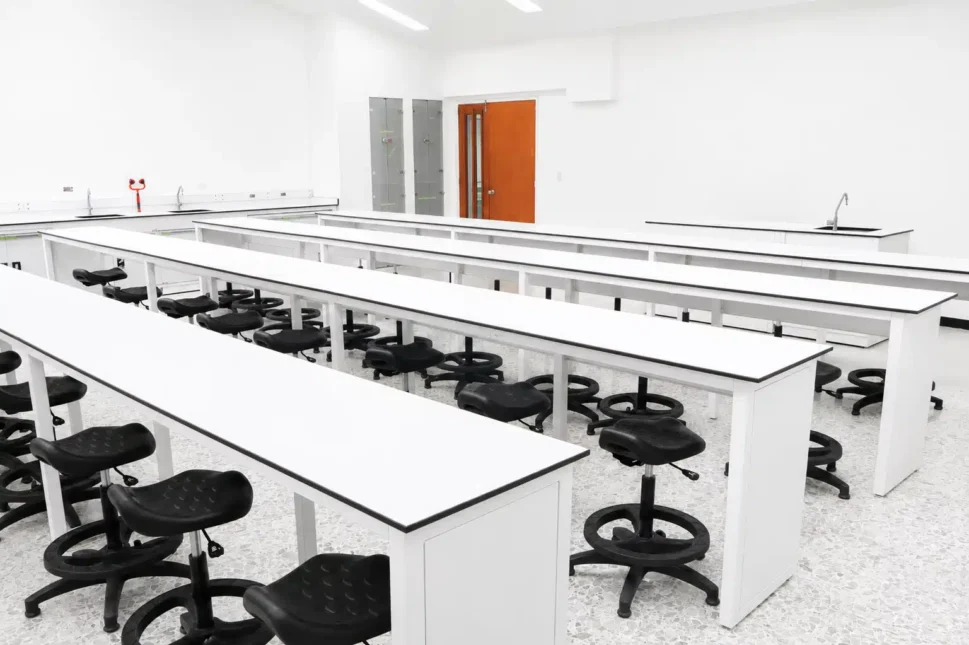
Creating an effective school laboratory requires much more than purchasing durable tables and cabinets. Educational laboratories must provide safe, organized, and adaptable learning environments where students can perform experiments, collaborate with classmates, and develop practical scientific skills. Poorly designed laboratory furniture can reduce classroom efficiency, create safety hazards, limit flexibility, and increase long-term maintenance costs.
This is where school lab furniture plays a critical role. Unlike conventional classroom furniture, laboratory furniture must support scientific activities while providing durability, chemical resistance, ergonomic comfort, and efficient space utilization. Understanding the essential design considerations helps schools create laboratories that improve both student learning and long-term facility performance.
School lab furniture is specifically designed for educational laboratories where students perform scientific experiments under instructor supervision, unlike traditional classroom furniture, laboratory furniture must safely support practical activities involving laboratory equipment, chemicals, glassware, and educational instruments. It should also accommodate changing classroom layouts, encourage collaboration, and withstand years of continuous use by multiple student groups.
A complete school laboratory typically includes workstations, benches, storage cabinets, sinks, shelving systems, mobile furniture, and laboratory worktops designed for educational applications. Together, these components create an organized environment that supports both teaching and hands-on learning.
School lab furniture contributes directly to the safety, functionality, and effectiveness of science education.
• Student Safety:
Safety is the primary objective of every educational laboratory, proper laboratory furniture helps organize equipment, provides stable work surfaces, supports safe movement throughout the laboratory, and reduces hazards associated with overcrowded or poorly designed workspaces. Furniture should also complement laboratory safety equipment, emergency procedures, and instructor supervision to create a safer learning environment.
• Learning Efficiency:
Well-designed laboratory furniture allows students to focus on experiments instead of workspace limitations. Appropriate workstation layouts improve visibility, facilitate collaboration, and provide convenient access to laboratory equipment and materials. Organized learning environments help instructors conduct practical activities more efficiently while improving student participation.
• Durability and Daily Performance:
School laboratories experience constant use throughout the academic year. Laboratory furniture should withstand repeated cleaning, heavy daily use, accidental impacts, and occasional exposure to laboratory chemicals without losing functionality. Durable furniture reduces maintenance costs and extends the service life of educational facilities.
• Flexibility for Different Teaching Methods:
Educational programs evolve over time, and laboratory spaces often support multiple scientific disciplines. Flexible furniture systems allow schools to reconfigure laboratories for chemistry, biology, physics, STEM education, or collaborative learning activities without requiring major facility renovations. Adaptable laboratory layouts help educational institutions maximize the long-term value of their investment.
Selecting school lab furniture begins with understanding how the laboratory will be used by both students and instructors.
• Evaluate Educational Requirements:
Every educational institution has different laboratory needs depending on the age of the students, curriculum requirements, class sizes, and scientific disciplines being taught. Understanding these factors helps determine the appropriate workstation configurations, storage solutions, demonstration areas, and laboratory equipment requirements before furniture is selected.
• Select Appropriate Materials:
School laboratory furniture should be constructed using materials capable of withstanding educational laboratory conditions. Work surfaces, cabinets, and structural components should resist moisture, routine cleaning, minor chemical exposure, and everyday wear while remaining easy to maintain throughout years of classroom use. Selecting appropriate materials improves durability while reducing long-term maintenance requirements.
• Design for Safety and Accessibility:
Laboratory layouts should promote safe movement for both students and instructors, furniture should provide sufficient workspace, maintain clear circulation paths, allow easy supervision during experiments, and support the safe placement of laboratory equipment and emergency devices. An accessible laboratory design also accommodates users with different physical needs and learning environments.
• Review Manufacturer Documentation:
Manufacturers should provide technical information describing materials, construction quality, testing, and applicable certifications. Reviewing this documentation helps schools compare different furniture systems while verifying product quality, durability, and suitability for educational laboratory applications.
• Plan for Future Growth:
Educational facilities frequently update laboratory equipment, teaching methods, and classroom technologies, selecting modular laboratory furniture allows schools to expand, reconfigure, or modernize laboratory spaces more easily without replacing the complete furniture system. Planning for future flexibility helps maximize long-term investment.
Before selecting school laboratory furniture, verify:
• Material durability and chemical resistance.
• Work surface performance.
• Storage capacity and organization.
• Ergonomic design.
• Safety features.
• Accessibility considerations.
• Manufacturer testing documentation.
• Applicable laboratory standards, including SEFA where appropriate.
• Manufacturer quality management certifications, such as ISO 9001.
Reviewing these factors helps ensure the furniture supports safe, effective, and long-lasting educational laboratory environments.
| Approach | Norlab School Lab Furniture | Standard Classroom Furniture |
|---|---|---|
|
Chemical-resistant surfaces |
Yes |
Limited |
|
Laboratory equipment support |
Yes |
No |
|
Student safety features |
High |
Basic |
|
Long-term durability |
High |
Moderate |
School lab furniture and conventional classroom furniture are designed for different purposes. While classroom furniture supports general instruction, laboratory furniture is engineered to accommodate scientific activities, improve safety, withstand demanding use, and provide the specialized functionality required in educational laboratories.
Many schools reduce the effectiveness of their science laboratories by overlooking important furniture selection criteria.
• Choosing Furniture Based Only on Initial Cost:
Lower-priced furniture may not provide the durability, safety, or performance required for laboratory environments.Investing in laboratory-grade furniture often reduces maintenance, repair, and replacement costs over the life of the facility.
• Ignoring Future Classroom Needs:
Educational laboratories frequently evolve as teaching methods and technologies change. selecting inflexible furniture systems can make future upgrades more difficult and expensive.
• Overlooking Ergonomics:
Students and instructors spend extended periods working at laboratory benches. Furniture should provide appropriate working heights and comfortable access to equipment to support learning while reducing fatigue.
• Neglecting Storage Planning:
Insufficient storage can create cluttered workspaces that reduce efficiency and increase safety risks. Properly designed cabinets, shelving, and storage systems help maintain organized laboratory environments.
• Focusing Only on Furniture Appearance:
Appearance should never be the primary selection criterion. Laboratory furniture should be evaluated according to durability, safety, material performance, maintenance requirements, and compliance with recognized standards rather than aesthetics alone.
School lab furniture is a fundamental component of creating safe, efficient, and engaging science learning environments, by evaluating educational requirements, selecting durable materials, designing for safety, reviewing manufacturer documentation, and planning for future flexibility, schools can create laboratories that support both student success and long-term operational performance. Rather than treating laboratory furniture as standard classroom equipment, educational institutions should view it as a long-term investment that enhances science education, improves safety, and provides reliable performance for future generations of students.
School lab furniture is specifically designed for laboratory environments where durability, chemical resistance, safety, and functionality are essential. Unlike standard classroom furniture, it is built to support scientific experiments, laboratory equipment, and frequent cleaning. Many manufacturers also design their products to meet recognized standards such as SEFA for laboratory furniture performance and operate under ISO 9001 quality management systems to ensure consistent quality and reliability.
School lab furniture commonly incorporates materials such as high-pressure laminate, epoxy resin, phenolic resin, and stainless steel, depending on the laboratory application, expected chemical exposure, and durability requirements.
Properly designed school lab furniture provides stable work surfaces, organized storage, safe circulation paths, and laboratory layouts that support instructor supervision while reducing potential hazards during practical activities.
Yes. Modular school lab furniture allows educational institutions to adapt laboratory layouts for new teaching methods, changing class sizes, updated equipment, and evolving STEM programs without requiring complete renovations.

Looking for a personalized quote on laboratory design or customized laboratory furniture?
We support your project with fully managed design & manufacturing solutions, ensuring every detail aligns with your workflow, safety needs, and performance requirements.
 Expert guidance included — free 3D design
Our lab safety specialists review your project personally.
 Fully custom — material, dimensions, configuration & finish
Furniture designed around your lab’s workflow, space constraints, and compliance requirements.
 American owned & operated — nationwide delivery
Manufactured and supported from Florida.