
In This Article, You’ll Learn: how SEFA standards help ensure laboratory quality, safety, and performance, which requirements have the greatest impact on laboratory furniture and equipment, what to evaluate when selecting compliant products, and how to choose the right solutions for a safe, durable, and compliant laboratory.
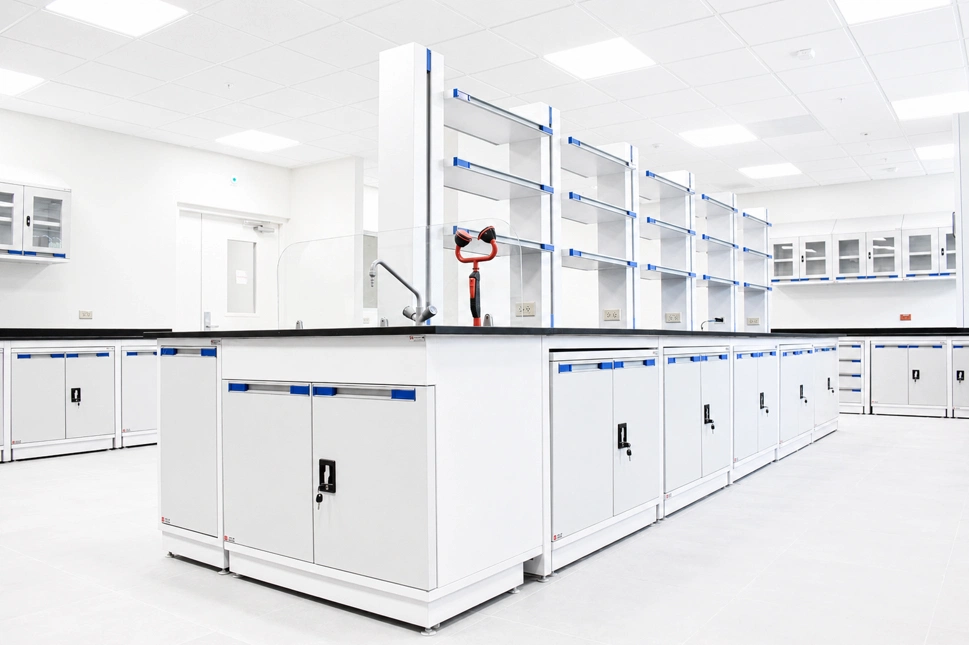
Selecting laboratory furniture is not just about appearance or cost. Laboratories depend on products that can withstand chemical exposure, heavy equipment, continuous use, and demanding operating conditions without compromising safety or performance. Unfortunately, many products claim to be «laboratory grade» without any objective proof of their quality.
This is where SEFA standards become essential. Developed specifically for laboratory environments, these standards establish performance requirements for laboratory furniture, laboratory workstations, casework, fume hoods, and other critical equipment. Understanding these standards helps laboratories choose products that have been evaluated under real-world conditions, reducing operational risks and improving long-term reliability.
SEFA are industry-recognized performance specifications created specifically for laboratory environments. Unlike general manufacturing standards, SEFA standards evaluate how laboratory products perform under conditions that closely resemble daily scientific operations. These tests measure whether furniture and equipment can safely withstand chemical exposure, heavy loads, repeated use, and demanding laboratory conditions.
Some of the most widely used standards include:
• SEFA 1 – Fume Hoods
• SEFA 3 – Laboratory Work Surfaces
• SEFA 8 – Laboratory Casework
• SEFA 10 – Balance Tables
• SEFA 11 – Chemical Storage Cabinets
Each standard establishes performance criteria specific to its intended laboratory application.
SEFA standards evaluate laboratory products through standardized testing procedures that simulate real laboratory use.
• Structural Performance:
Furniture is tested for strength, load capacity, stability, and resistance to continuous use. These evaluations verify that cabinets, benches, and workstations maintain their structural integrity throughout years of laboratory operation.
• Chemical Resistance:
Laboratory work surfaces and storage systems are exposed to common laboratory chemicals to evaluate their resistance to staining, corrosion, degradation, and surface damage. This helps ensure long-term durability in demanding environments.
• Functional Performance:
Many SEFA standards also evaluate operational characteristics such as drawer performance, door alignment, hardware durability, and component reliability during repeated daily use. These tests verify that laboratory furniture remains functional throughout its service life.
• Safety Verification:
Some SEFA standards include performance requirements intended to improve laboratory safety by evaluating product stability, containment performance, and operational reliability under laboratory conditions.
Understanding how manufacturers comply with SEFA helps laboratories make better purchasing decisions.
• Identify the Applicable Standard:
Different laboratory products require different SEFA standards. For example, laboratory casework, countertops, balance tables, and chemical storage cabinets each follow different testing requirements.
• Request Supporting Documentation:
Manufacturers should be able to provide documentation demonstrating compliance with applicable SEFA standards through testing or certification records. Independent verification provides greater confidence than marketing claims alone.
• Evaluate Complete System Performance:
Laboratories benefit most when furniture, work surfaces, and storage systems all comply with relevant SEFA standards, creating a consistent level of quality across the entire facility.
• Consider Long-Term Value:
Products that meet SEFA standards typically provide greater durability, lower maintenance requirements, and longer service life, reducing total ownership costs over time.
Before selecting laboratory furniture or equipment, verify:
• Manufacturer testing documentation
• Chemical resistance performance
• Structural load capacity
• Material quality
• Product durability
• Compatibility with laboratory applications
• Compliance with additional industry standards when required
Reviewing these factors helps laboratories select products that deliver reliable long-term performance.
| Product Selection | Products Meeting SEFA Standards | Non-Tested Laboratory Products |
|---|---|---|
|
Structural Testing |
Yes |
Varies |
|
Chemical Resistance Verification |
Yes |
Limited |
|
Laboratory-Specific Testing |
Yes |
Often No |
|
Long-Term Durability |
High |
Uncertain |
|
Performance Consistency |
Excellent |
Variable |
|
Confidence During Specification |
High |
Lower |
Products manufactured according to SEFA provide measurable performance data rather than relying solely on manufacturer claims. Although non-tested products may appear similar, they often lack independent verification of their durability, safety, and long-term laboratory performance.
Many laboratories fail to maximize the value of SEFA standards because of avoidable purchasing mistakes.
• Assuming Every Laboratory Product Meets SEFA:
Not all laboratory furniture is tested according to SEFA. Always verify manufacturer documentation before purchasing.
• Looking Only at Initial Cost:
Lower-cost products without SEFA compliance may require more maintenance, deteriorate faster, or fail prematurely under laboratory conditions.
• Confusing SEFA With General Manufacturing Standards:
General product standards evaluate manufacturing quality, while SEFA standards specifically assess laboratory performance.
• Ignoring Product-Specific Standards:
Different laboratory products require different SEFA standards. Selecting the correct standard is essential for ensuring appropriate performance.
• Failing to Review Supporting Documentation:
Reliable manufacturers should clearly demonstrate how their products comply with applicable SEFA standards through technical documentation or testing results.
SEFA standards have become one of the most important benchmarks for evaluating laboratory furniture and equipment because they focus specifically on the challenges found in scientific environments. By understanding what these standards measure and selecting products that comply with the appropriate SEFA requirements, laboratories can improve safety, increase durability, simplify product selection, and reduce long-term operational costs. Rather than viewing SEFA standards as optional specifications, laboratories should use them as a practical framework for choosing reliable products capable of supporting years of demanding scientific work.
SEFA standards provide objective performance requirements that help laboratories compare products based on structural strength, chemical resistance, durability, and long-term reliability instead of relying solely on manufacturer claims.
No. Different SEFA standards apply to specific product categories such as laboratory casework, countertops, balance tables, and chemical storage cabinets. Selecting the correct standard depends on the intended application.
Yes. Products designed to meet SEFA standards generally offer greater durability, lower maintenance requirements, and longer service life, helping reduce repair and replacement costs throughout the laboratory’s lifecycle.
Yes. SEFA standards are widely recognized throughout the United States and are frequently referenced by laboratory designers, architects, engineers, manufacturers, and facility managers when specifying laboratory furniture and equipment.
• When evaluating suppliers, verify that their SEFA standards compliance is supported by technical documentation, laboratory-specific testing, high-quality manufacturing practices, and experience designing products for demanding scientific environments.

Looking for a personalized quote on laboratory design or customized laboratory furniture?
We support your project with fully managed design & manufacturing solutions, ensuring every detail aligns with your workflow, safety needs, and performance requirements.
 Expert guidance included — free 3D design
Our lab safety specialists review your project personally.
 Fully custom — material, dimensions, configuration & finish
Furniture designed around your lab’s workflow, space constraints, and compliance requirements.
 American owned & operated — nationwide delivery
Manufactured and supported from Florida.