
In This Article, You’ll Learn: how clean rooms maintain controlled environments for critical processes, which control strategies have the greatest impact on contamination prevention and regulatory compliance, what to evaluate before designing or upgrading a clean room, and how to choose the right solution for your laboratory or manufacturing facility.
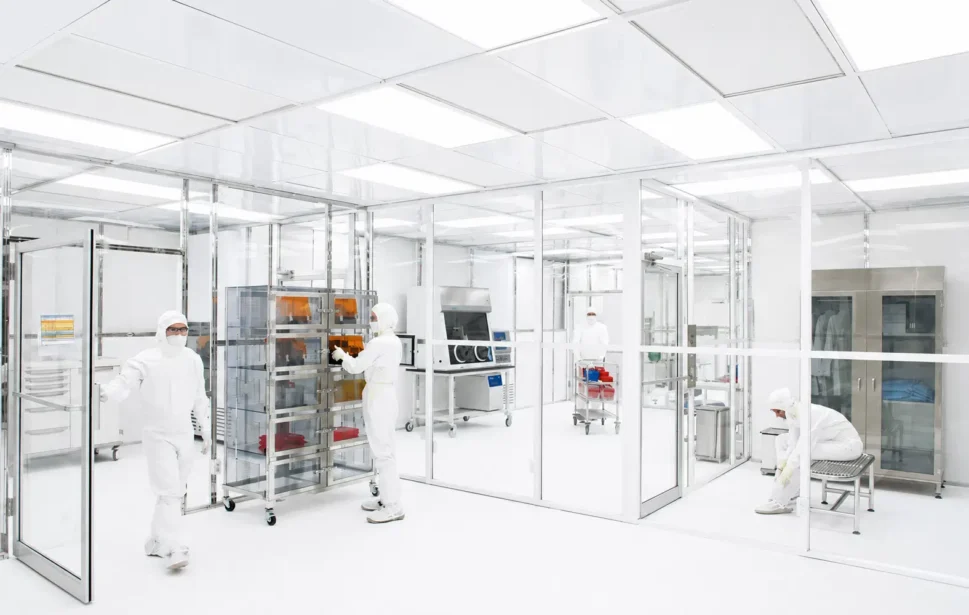
Maintaining a clean room involves much more than installing high-efficiency air filters or restricting personnel access. Every clean rooms depends on carefully controlled airflow, pressure differentials, temperature, humidity, specialized equipment, and operational procedures working together to minimize contamination. Without an effective contamination control strategy, even well-designed facilities can experience product defects, compromised research, failed inspections, and costly operational disruptions.
This is where clean room control strategies become essential. Rather than relying on a single technology, successful contamination control combines facility design, environmental monitoring, personnel practices, validated equipment, and recognized industry standards. Understanding how these strategies work together helps organizations build clean rooms that consistently meet performance requirements while supporting regulatory compliance and operational efficiency.
A clean room is a controlled environment designed to limit airborne particles and other sources of contamination that could affect sensitive products, research, or manufacturing processes. Unlike conventional workspaces, clean rooms maintain specific environmental conditions through engineered ventilation systems, filtration, controlled air movement, and operational protocols. Depending on the application, they may also regulate temperature, humidity, differential pressure, and microbial contamination.
Clean rooms are commonly used in pharmaceutical manufacturing, biotechnology, medical device production, semiconductor fabrication, healthcare facilities, and research laboratories where contamination control is critical to product quality and process reliability. Together, these environmental controls create conditions that protect both personnel and sensitive operations.
Effective contamination control depends on multiple systems operating together rather than independently.
• Airflow and Particle Control:
Airflow management is one of the most important components of clean rooms, high-efficiency filtration systems remove airborne particles while carefully designed airflow patterns prevent contaminants from accumulating around critical work areas. Maintaining proper air movement helps preserve the required cleanliness classification and reduces the risk of cross-contamination.
• Environmental Stability:
Maintaining consistent environmental conditions is essential for many laboratory and manufacturing processes, control strategies regulate temperature, humidity, and room pressure to create stable operating conditions that support sensitive equipment, product quality, and process repeatability. Environmental stability also helps minimize variations that could compromise research or production results.
• Personnel and Operational Procedures:
People are one of the largest sources of contamination inside clean rooms, proper gowning procedures, controlled entry protocols, personnel training, and standardized operating practices significantly reduce the introduction of particles and microorganisms into controlled environments. Consistent operational procedures help ensure that clean room performance is maintained throughout daily activities.
• Monitoring and Compliance:
Continuous monitoring allows organizations to verify that clean room conditions remain within acceptable limits. environmental monitoring programs may include airborne particle counts, pressure differential measurements, temperature and humidity verification, airflow testing, and other performance indicators. These measurements help identify deviations early and support ongoing regulatory compliance.
Implementing effective clean room control begins with understanding the specific contamination risks associated with the facility and designing systems that work together to minimize those risks.
• Evaluate Process Requirements:
Every clean room should be designed around the activities performed inside it, pharmaceutical production, medical device manufacturing, biotechnology research, electronics assembly, and healthcare applications each have different contamination control requirements. Identifying process sensitivity helps determine the appropriate clean room classification, airflow design, and environmental controls.
• Design an Integrated Environmental Control System:
Successful contamination control requires more than installing HEPA filters, ventilation systems, pressure differentials, airflow patterns, humidity control, temperature regulation, and room layout should be planned as a single integrated system. Coordinating these elements improves contamination control while supporting consistent operational performance.
• Select Appropriate Equipment and Materials:
Equipment installed inside a clean room should support contamination control rather than become a contamination source. laboratory furniture, pass-through systems, storage solutions, workstations, and interior finishes should be selected based on their cleanability, durability, particle generation characteristics, and compatibility with cleaning and disinfection procedures.
• Establish Monitoring and Maintenance Programs:
Maintaining clean room performance requires continuous verification, routine environmental monitoring, equipment inspections, filter maintenance, airflow testing, and documented preventive maintenance help ensure that the clean room continues to operate according to its design specifications throughout its lifecycle.
• Train Personnel Continuously:
Even the most advanced clean room cannot perform effectively without properly trained personnel, employees should understand contamination control principles, gowning procedures, cleaning protocols, equipment operation, and facility access requirements. Ongoing training helps maintain consistent practices and reduces the risk of contamination caused by human error.
Before selecting clean room equipment or infrastructure, verify:
• Applicable clean room standards and classifications.
• HVAC and filtration system performance.
• Environmental monitoring capabilities.
• Material compatibility with cleaning and disinfection procedures.
• Furniture and equipment designed for controlled environments.
• Maintenance and validation requirements.
• Manufacturer testing documentation.
• Long-term operational flexibility.
Reviewing these factors helps ensure that every component contributes to maintaining clean room performance and contamination control.
| Approach | Standard Laboratory | Clean Room |
|---|---|---|
|
Airborne particle control |
Limited |
Controlled |
|
Airflow management |
General ventilation |
Engineered airflow |
|
Environmental monitoring |
Basic |
Continuous |
|
Contamination control |
Standard practices |
Comprehensive |
|
Regulatory requirements |
General laboratory standards |
Controlled environment standards |
Standard laboratories and clean rooms are designed for different operational requirements, while conventional laboratories provide safe working environments for many applications, clean rooms are specifically engineered to maintain controlled environmental conditions where contamination can directly affect product quality, research accuracy, or manufacturing performance.
Many organizations underestimate the complexity of contamination control when planning or operating clean rooms.
• Focusing Only on HEPA Filters:
HEPA filtration is only one component of contamination control, airflow design, room pressurization, environmental monitoring, personnel procedures, and operational practices are equally important for maintaining clean room performance.
• Ignoring Personnel Practices:
Even well-designed clean rooms can experience contamination if personnel do not follow proper gowning, cleaning, and operating procedures. Consistent training and standardized protocols are essential for maintaining controlled conditions.
• Selecting Equipment Not Designed for Clean Rooms:
Conventional furniture and equipment may generate particles or be difficult to clean, equipment intended for clean room applications should support contamination control through appropriate materials, construction methods, and surface finishes.
• Neglecting Routine Monitoring:
Without regular environmental monitoring and preventive maintenance, contamination risks may remain undetected until they affect product quality or regulatory compliance. Continuous verification helps identify problems before they become significant operational issues.
• Treating Compliance as a One-Time Activity:
Clean room compliance requires continuous attention throughout the facility’s operation, regular validation, maintenance, documentation, and personnel training are necessary to maintain performance over time.
Clean room control strategies provide the foundation for maintaining contamination-free environments that support research, manufacturing, and healthcare operations, by integrating environmental controls, airflow management, personnel procedures, monitoring programs, and properly selected equipment, organizations can improve product quality, protect sensitive processes, and support long-term regulatory compliance. Rather than viewing contamination control as a single system, laboratories should adopt a comprehensive strategy where every component contributes to maintaining clean rooms performance throughout the facility’s lifecycle.
Clean room control strategies help maintain controlled environmental conditions by reducing airborne particles, preventing contamination, and supporting consistent product quality, research reliability, and regulatory compliance.
The most widely recognized standards include ISO 14644 for clean rooms classification and performance, while many industries also follow Good Manufacturing Practices (GMP) and other regulatory requirements depending on the application, such as pharmaceutical manufacturing, biotechnology, or medical devices.
They combine engineered airflow, HEPA or ULPA filtration, pressure differentials, environmental monitoring, proper equipment selection, cleaning procedures, and personnel training to minimize contamination from both environmental and human sources.
Yes. Furniture designed specifically for clean rooms uses materials and construction methods that minimize particle generation, withstand frequent cleaning, and support contamination control. Many manufacturers also follow quality management systems such as ISO 9001 to ensure consistent manufacturing processes.
Evaluate the required clean room classification, applicable standards such as ISO 14644, HVAC performance, airflow design, environmental monitoring systems, equipment compatibility, cleaning requirements, maintenance procedures, and the operational needs of your facility to ensure long-term performance and compliance.

Looking for a personalized quote on laboratory design or customized laboratory furniture?
We support your project with fully managed design & manufacturing solutions, ensuring every detail aligns with your workflow, safety needs, and performance requirements.
 Expert guidance included — free 3D design
Our lab safety specialists review your project personally.
 Fully custom — material, dimensions, configuration & finish
Furniture designed around your lab’s workflow, space constraints, and compliance requirements.
 American owned & operated — nationwide delivery
Manufactured and supported from Florida.